Eroded mortar joints, crumbling flaunching or a stack that's letting water in? We repoint chimneys, renew flaunching, fit cowls and cap disused stacks — using the correct mortar for your property's age.
Tell us the job in 30 seconds. No pushy sales, no call-out fee.
📞 Call Now: 0247 798 1271Chimney repointing in Coventry costs from £150 for minor work up to £800+ for a full stack, depending on scope and access. We renew flaunching, fit cowls and cap disused stacks, and use NHL lime mortar on period brickwork. Free surveys, 10-year guarantee, NFRC registered.
Repointing a chimney is about the mortar between the bricks, not the flashing at its base. Here is how to tell repointing from a bigger job. Coventry's mix of exposed inter-war stacks and sheltered Victorian terraces means no two chimneys weather at the same rate, so we judge each on what we find at the scaffold rather than a rule of thumb.
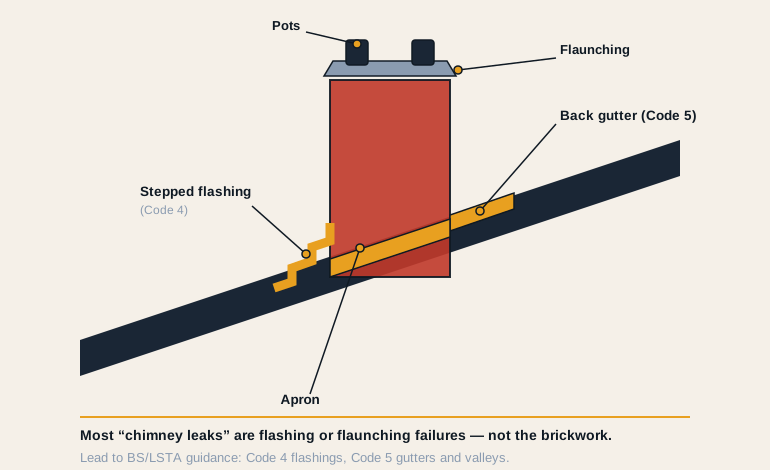
Chimney work splits into several related jobs. Repointing rakes out and renews the eroded mortar joints between the bricks. Flaunching is the mortar fillet at the top of the stack that beds the pots and sheds water — it cracks and crumbles with age. Cowls are fitted to pots to stop rain, birds and downdraught. Capping seals a disused stack while keeping it ventilated. Most stacks need a combination.
The single most important decision on a period Coventry chimney is the mortar. Pre-1950s brickwork is soft and was built with lime mortar. Repointing it in hard modern Portland cement traps moisture and causes the brick face to spall and crumble — doing more damage than the eroded joints ever did. We use natural hydraulic lime (NHL) mortar on period stacks, matched to the brick, so the repair works with the structure rather than against it.
A chimney stack is the highest, most exposed part of the roof, and reaching it safely is most of the job. A stack accessible from a scaffold tower costs far less to repoint than one needing a full scaffold or a roof-edge platform. We assess access at survey and quote it honestly.
Coventry's chimney work is concentrated on its pre-war stock, because that's where the stacks are. The Victorian and Edwardian terraces of Earlsdon, Chapelfields, Stoke Park and Hillfields were built with tall multi-pot stacks in soft red brick and lime mortar — and after 100+ years the joints have eroded, the flaunching has crumbled, and the lead flashing at the base has often failed too. These are the classic Coventry repointing jobs.
On these period stacks, correct lime mortar is non-negotiable. We see the damage caused by previous cement repointing regularly — spalled, flaking brick faces where a hard mortar has trapped moisture in soft Victorian brick. Putting it right means raking out the cement and repointing properly in NHL lime, which is why we survey and specify carefully rather than reaching for the cement mixer.
The interwar semis of Coundon, Radford and Whoberley have their own chimney pattern: shorter stacks, often with the flaunching gone and the pots loose, and frequently a redundant flue from a long-removed fireplace. On these, capping a disused stack — sealing it against rain while keeping it ventilated to prevent internal condensation — is a common and cost-effective job.
Chimney stacks take the weather from every direction, and the prevailing south-westerlies drive rain hardest onto the exposed faces. On Coventry's more open estates and the higher ground around Allesley and Eastern Green, the windward face of a stack erodes faster than the sheltered side — so repointing is often needed on one elevation of a stack years before the others. We assess all faces at survey.
Priced per stack after survey. Access and mortar type are the main variables.
NHL lime mortar on period brickwork. Free survey and written quote; access assessed honestly.
You can read a lot about a Coventry chimney from the street: white staining on the brickwork signals water getting in, dark damp patches at the stack base suggest failed flashing, a visible lean or stepped cracking in the mortar joints points to structural movement, and vegetation growing from the stack means water is sitting in eroded joints. Any of these on a period Earlsdon or Hillfields stack is worth a survey before winter drives the problem deeper.
Because a chimney stack needs the same high-level access as ridge and upper-slope roof work, it's economical to combine chimney repointing with any other work needing that access. If the stack flashing has failed as well as the mortar — very common on Coventry's Victorian terraces — doing the repointing, flaunching and flashing in one visit off one scaffold is far cheaper than separate call-outs.
Natural hydraulic lime (NHL) mortar is the correct specification for pre-1950s brickwork; Portland cement is harder than period brick and traps moisture, causing the brick face to spall.
Source: Historic England / Building Regulations guidance on mortars
Book a Chimney Survey in Coventry — Correct Mortar, Honest Access Pricing
📞 0247 798 1271“Our Earlsdon terrace stack had been cement-pointed years ago and the brick was flaking off. They raked it out and redid it in lime mortar properly. Explained exactly why it had failed.”
“Flaunching had crumbled and a pot was loose on our Coundon semi. Renewed the flaunching, refitted the pot and capped the unused flue. Tidy and fairly priced.”
“Downdraught and birds coming down the chimney. Fitted cowls and repointed the worst face. Sorted both problems in a morning.”
We check how far the mortar has failed and whether the bricks are sound enough to repoint.
Rake-out, repoint, and any flaunching or pot work itemised.
Scaffold to the stack, then the failed mortar is raked out cleanly.
Fresh mortar matched to the original, struck to shed water, plus re-flaunching around the pots if needed.
Cured, cleaned down, scaffold away, guarantee handed over.
| Job | Typical time on site |
|---|---|
| Repoint a standard stack | Half to 1 day |
| Repoint + re-flaunch pots | 1 day |
| Repoint tall/multiple stacks | 1–2 days |
| Cure before rain | 24–48 hours ideally |
Repointing must cure in dry, mild conditions — we avoid frost and heavy rain so the mortar sets properly.
Repointing needs scaffold or a tower to the stack for safe working time — it isn't a ladder job.
Scaffold is used for all repointing — safe standing time at the stack is essential. Coventry's post-war estates scaffold cleanly from the front or side, but the Victorian terraces of Hillfields and Foleshill frequently have no rear vehicle access, so scaffold and skips are worked in from the street.
| Job | Typical range | Notes |
|---|---|---|
| Repoint standard stack | £300–£650 | Rake out + repoint |
| Repoint + re-flaunch pots | £400–£800 | Includes flaunching |
| Tall or multiple stacks | £600–£1,200 | Access dependent |
| Repoint + minor brick replacement | £500–£1,000 | Odd spalled bricks |
| Scaffold to stack | Included in quote | Itemised separately |
Guide prices only — every roof is quoted individually after a free survey.
Staged payment on larger stacks, nothing before materials on site; standard repoint paid on completion. VAT as applicable.
Repointing workmanship is guaranteed for 10 years; the job is only as good as the cure, which is why we time it to the weather.
Repointing means scaffold up for a day or two and some noise raking out the old mortar, but no internal disruption.
We schedule repointing for dry, mild spells so the mortar cures hard — a frosty or wet forecast gets a new date.
If the mortar joints are cracked and recessed but the bricks themselves are sound, repointing is the fix. If the bricks are spalling — flaking and crumbling, common on exposed stacks in Allesley and Eastern Green after years of frost — then repointing alone won't hold and the top courses may need rebuilding. A close look from the scaffold tells us which.
A stack sheds water through failed pointing and cracked flaunching, and that water tracks down inside the brickwork to appear as damp on the chimney breast, sometimes a floor below. On Coventry's older terraces it's one of the most common hidden leak paths — and it's why we check the whole stack, not just the visible face.
Yes. On the Victorian and Edwardian stacks in Earlsdon and Chapelfields the mortar colour and the joint profile matter, both for looks and to shed water properly. We mix to match the original rather than slapping on a grey modern mortar that stands out and behaves differently.
Done properly, with the joints raked out to a good depth and the mortar matched and struck to shed water, a repointed Coventry stack should stand 20 to 30 years before it needs attention again. The failures we see early are almost always where someone smeared new mortar thinly over old, cracked joints without raking them out first — a quick job that doesn't last a winter.
Chimney repointing in Coventry starts from £150 for minor localised work and runs to £400–£800+ for a full stack, depending on size and access. Flaunching renewal is £150–£400, cowls £80–£200 per pot, and capping a disused stack £200–£500.
Pre-1950s Coventry stacks — the Victorian terraces of Earlsdon, Chapelfields and Hillfields — need NHL lime mortar. Hard Portland cement traps moisture in soft period brick and causes the face to spall, doing more damage than the eroded joints. We use lime on period brickwork as standard.
Flaunching is the mortar fillet at the top of the stack that beds the pots and sheds water. It cracks and crumbles with age, letting water into the stack. If your pots are loose or the top mortar is broken up, the flaunching needs renewing — a common job on Coventry's older stacks.
Yes. Capping seals a redundant stack against rain while keeping it ventilated to prevent internal condensation and damp. It's a common, cost-effective job on the 1930s semis of Coundon and Radford where fireplaces have been removed.
Coventry's prevailing south-westerly weather drives rain hardest onto the exposed faces of a stack. The windward side erodes faster, so repointing is often needed on one elevation years before the others — particularly on the open estates and higher ground around Allesley and Eastern Green.
Yes. Cowls stop rain, birds and downdraught entering the pot. We fit the right cowl for the problem — anti-downdraught, bird guard, or a capping cowl for a disused flue — from £80–£200 per pot.
Chimney repointing and repair work carries a written 10-year workmanship guarantee. We're NFRC registered and carry £5m public liability insurance.
Free surveys across all Coventry postcodes. Written itemised quotes, no call-out fee, 10-year workmanship guarantee.
📞 0247 798 1271