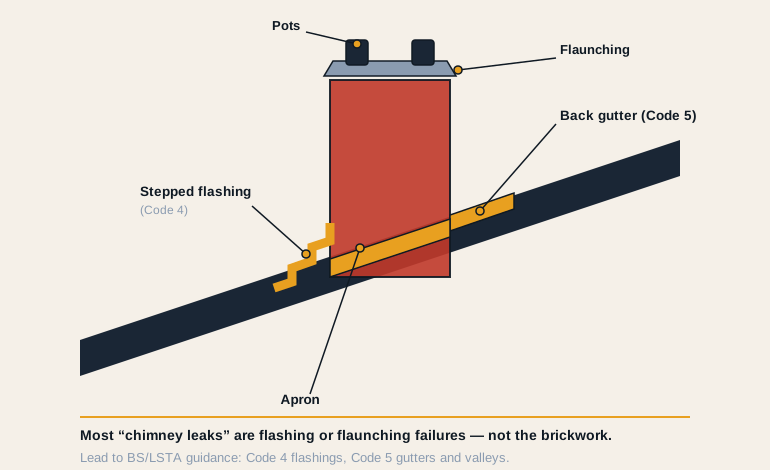
Chimney repair is one of the most misquoted and most frequently bodged roofing jobs on Coventry’s period housing stock. The wrong mortar specification causes more damage than it prevents. The choice between repointing and rebuilding is not always obvious from the ground. This guide gives you the information to understand what you are being quoted for and why.
Repointing — When It Is the Right Answer
Repointing removes eroded mortar from the joints between bricks to a depth of 15–20mm and replaces it with fresh mortar. It is appropriate when:
- The brickwork itself is sound — no spalling, cracking or structural movement
- Mortar joints are eroded but not absent
- The chimney is vertical — no lean beyond 10–15mm from plumb
- The cap and flaunching (the mortar cap over the chimney top) are the primary failure point
A well-repointed chimney on a Coventry Victorian property, using the correct NHL lime mortar, should give 25–40 years of service before the next maintenance cycle.
Natural hydraulic lime (NHL) mortar is the correct specification for pre-1950s brickwork; Portland cement is harder than period brick and causes spalling.
Source: Historic England technical guidance on mortars
The Mortar Specification Problem
This is the most consequential decision in chimney repair and the most frequently got wrong. Victorian and Edwardian brickwork in Coventry was laid with lime mortar — a relatively soft, flexible material that allows the structure to move slightly without cracking. The mortar is designed to be the sacrificial element: it erodes before the brick does, protecting the brick face.
Repointing with Portland cement mortar on period brickwork creates a rigid joint harder than the surrounding brick. As the chimney expands and contracts through thermal and moisture cycling, the brick face spalls rather than the mortar eroding. The damage caused by incorrect mortar specification is often worse than the original erosion it was meant to fix.
How to check: Ask any roofer quoting for chimney repointing in Coventry: "What mortar will you use?" If the answer is "sand and cement" on a pre-1950s property, ask them to specify an NHL lime addition. If they cannot or will not, find a roofer who understands period masonry.
Rebuilding — When Repointing Is Not Enough
A partial or full chimney rebuild is required when the structural integrity of the brickwork itself has been compromised. The indicators:
- Visible lean — more than 25mm deviation from vertical requires rebuild
- Spalled brickwork — brick faces that have shed their face layer, typically caused by previous cement repointing or severe frost damage
- Cracked courses — horizontal or diagonal cracks through multiple brick courses
- Hollow-sounding bricks when tapped — indicates internal delamination
- Saturated core — visible on loft inspection as persistent damp staining on the chimney breast in the roof space
A partial rebuild (above the roof line only) costs £800–£1,800 on a typical Coventry stack. Full rebuild from the roof line to the pots costs £1,200–£3,500 depending on stack height, complexity and access requirements.
Lead Flashing at the Chimney Base
Chimney repointing and rebuilding should always include assessment of the lead flashings at the chimney base. Flashings are independent of the brickwork condition — sound brickwork can have failed flashings, and failed brickwork often has failing flashings too. We assess lead condition during every chimney survey and quote flashing work separately if required.
Free Chimney Survey in Coventry
Correct mortar specification every time. Written quote before work starts. Call 0247 798 1271.
📞 Call 0247 798 1271 — Free Quote